Holding the Net: What Four Days of ScarWork Training Taught Me
A scar is not a line on the surface. It is a place where the web has been interrupted, and the body has done its best to repair the breach.
I have just returned from four days in London training with Jan Trewartha, founder of Body in Harmony. Jan is a ScarWork teacher with more than thirty years of experience, and the room held the kind of quiet authority that only comes from someone who has spent decades learning through their hands. She teaches Sharon Wheeler's ScarWork - a gentle, hands-on approach to working with scarred and altered tissue.
I expected to learn technique. I didn't expect to spend the first morning holding a fishing net.
The Net
We stood in a circle, each of us gripping a section of net. Jan asked us to feel the tension travel. When one person pulled gently on their corner, the rest of us felt it - not as a single tug, but as a subtle redistribution of weight across the whole mesh. Pull here, and something shifts over there.
Then she invited one person to hold a piece of the net tight in the centre, pinching it between finger and thumb. That small fixed point represented a scar: tissue that had healed, glued down, and stopped moving with the rest of the web.
What happened next was extraordinary. As the rest of us continued to hold the net in gentle tension, the pulled section changed the feel in every hand around the circle. Some people felt a diagonal pull. Others felt their wrists rotate to compensate. The tension travelled in individual, unexpected directions. No two people experienced the same thing.
That is fascia. A continuous, three-dimensional web of connective tissue that runs through and around every muscle, organ, nerve and vessel in the body. A scar is not a line on the surface. It is a place where the web has been interrupted, and the body has done its best to repair the breach. Around the repair, the rest of the tissue organises itself differently. Sometimes for years. Sometimes for decades.
Why Light Touch Makes Sense
Sharon Wheeler's ScarWork uses extremely light touch to work with scarred and altered tissue. It is not about breaking anything down or forcing a release. The intention is to help the tissue find its way back home.
There is a phrase in this work: tissue always goes home. It captures the gentle trust at the heart of ScarWork - that given the right kind of listening contact, the body remembers how to reorganise itself. Jan described it as the most natural thing in the world once the tissue feels safe enough to soften and move again.
A scar can hold tissue in a fixed position long after the original injury has healed. With patient, informed contact, the body can begin to reorganise itself around the old fixed point. It doesn't always happen in one session. Sometimes the change is immediate; sometimes it unfolds over days.
The touch is so light that, from the outside, it can look like nothing is happening. But fascia responds to slow, informed, patient contact. It is not a muscle to be pressed. It is a sensory system that needs to feel safe enough to change.
The Emotional Weight I Wasn't Expecting
I knew scar work could be emotional. I wasn't prepared for how deeply.
A scar is rarely just physical. For many people, it marks a moment when something happened to their body without their full consent, or when their body changed in a way they are still learning to live with. C-section scars, surgical scars, accident scars, burn scars - they all carry memory. Working with the tissue can bring that memory to the surface, sometimes quietly, sometimes in waves.
What stayed with me most was hearing women describe what it felt like to be reconnected to a part of themselves they had felt cut off from. It wasn't that the scar had been fixed or erased - more that they felt whole in a way they hadn't realised they were missing.
One phrase came up again and again: "I don't feel cut in two anymore."
The Epidural Scar That Changed Everything
On the training, we heard about work with epidural scars. This was the detail that shocked me most.
Women who had given birth years ago - in one case, twenty-five years ago - had carried tension around the epidural site in their lower spine without realising how much it was affecting them. The small scar where the needle had entered had created a point of fixation in the fascia of the back. Over time, that fixation had influenced how they moved, how their spine felt, and in some cases how much tension their body was holding further down the line.
When the scar tissue was worked with gently, some women experienced an emotional release. In the days that followed, they reported their spine feeling longer, their body feeling lighter, and a sense of ease they hadn't known was missing.
A client I worked with told me I had changed her life after ScarWork on her epidural scar from twenty-five years ago. I share that with care, because every body is different and no one outcome can be promised. But it illustrates something important: it doesn't matter how many years have passed since a scar was made. Function can still return, sensation can shift, and the body can feel different in unexpected ways.
That is why I no longer think of scar work as cosmetic, or even primarily about the scar itself. It is about the whole person living inside the body that carries it.
No Scar Too Small
One of the most humbling parts of the training was realising how small a scar can be and still create a ripple.
A tiny scar from a keyhole surgery. A childhood knee scrape that healed badly. A dental scar inside the mouth. A burn that looked insignificant from the outside. In each case, the tissue around it had organised itself around the fixed point, and the body had quietly adapted.
That is why I now believe almost any scar is worth exploring. You cannot predict from looking at it what it is doing underneath. You have to listen with your hands.
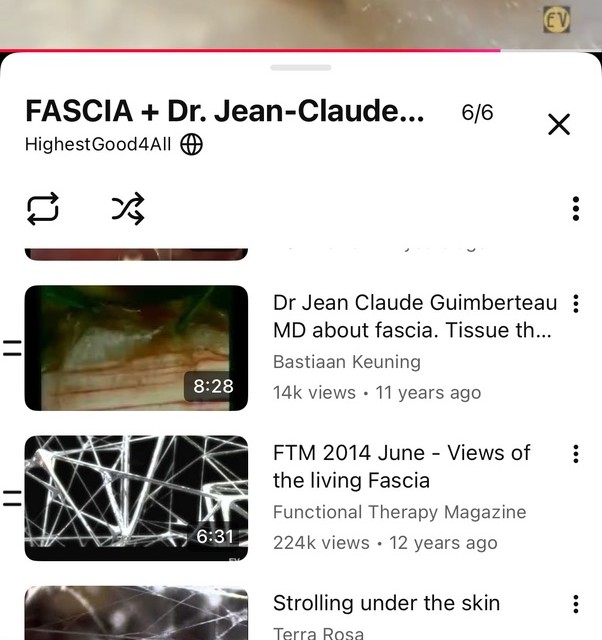
These are some of the fascia resources I was exploring alongside the training - a reminder that this work sits within a much wider conversation about how the body is connected, not in parts.
This video on how fascia functions in the body also helped me see what the net exercise was pointing toward - fascia as a continuous, responsive web rather than a collection of separate parts.
Forty-Five Minutes on a Thyroidectomy Scar
During the training I worked on a thyroidectomy scar - a scar at the base of the neck, left by surgery to remove the thyroid. I spent forty-five minutes with it, using the very light touch that ScarWork is built on. Nothing forceful. Nothing that would look like much from the outside.
The results astounded me. I don't use that word lightly. The tissue visibly softened, the pulling eased, and the whole area looked as though it had been given permission to settle back into the neck again. It genuinely blew my mind - that something so gentle could create a change you could see.
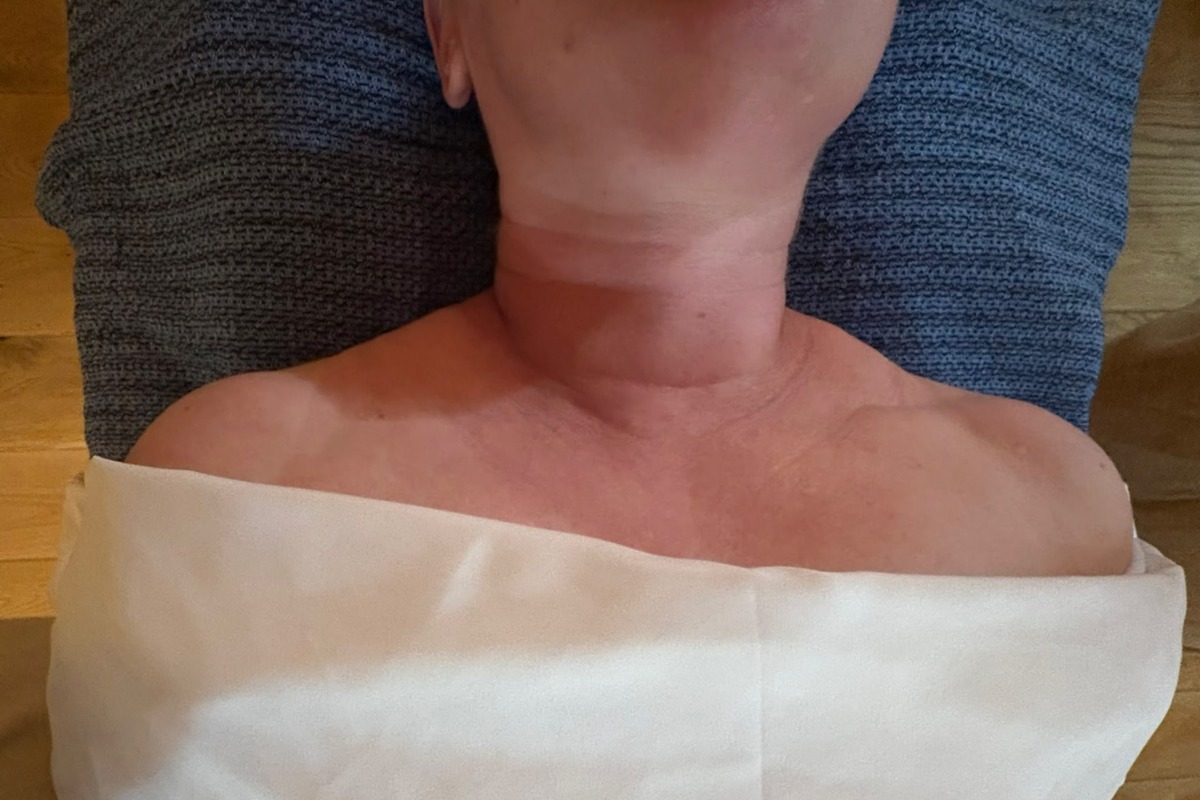
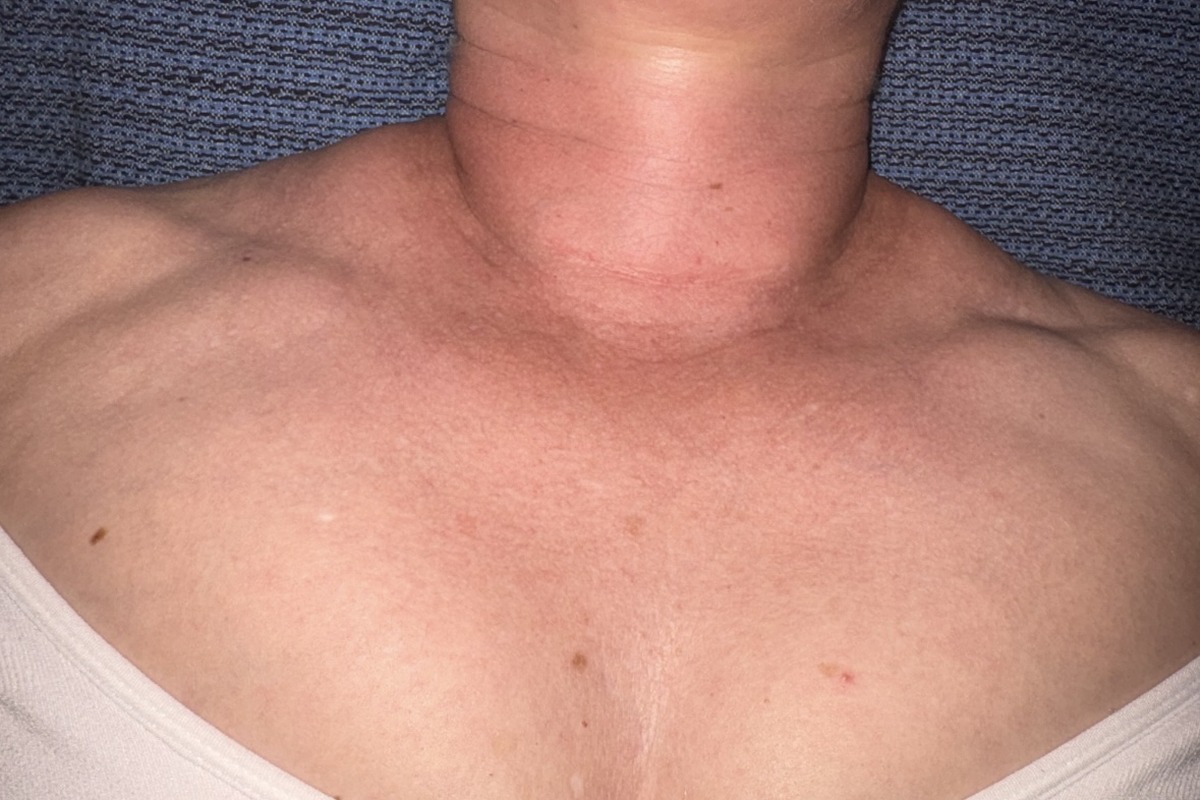
Before and after forty-five minutes of ScarWork on a thyroidectomy scar. Every body responds differently, and no outcome can be promised - but moments like this are why I believe so deeply in this work.
ScarWork Coming to Caerphilly
ScarWork is coming to Root & Moss. I am not rushing it. This is work I want to integrate slowly and respectfully, alongside the Manual Lymphatic Drainage and Myofascial Release treatments I already offer here in Caerphilly and across South Wales.
My approach will remain the same: meet the body where it is, never force, and trust that light, present touch can create conditions for deep change. Whether you are curious about a C-section scar, an abdominal surgery scar, a burn, or an older scar you have simply learned to live with, I would love to hear from you.
- If you would like to be among the first to book ScarWork or scar tissue massage at Root & Moss, you can join the ScarWork waitlist.
- You can also read more about how I began training in scar tissue massage here.
This work feels like the natural next step. The net taught me that nothing in the body happens in isolation. A scar in one place can speak through the whole system. And sometimes, with patience and the right touch, the tissue remembers how to go home.